Tuesday, September 20, 2011

Vientiane, Laos-y


Click HERE for photos.

Punning aside, I rather liked Laos and its capitol city. From what I’d read about the country, I’d expected that it would be more laid back and under-developed than Thailand. I caught glimpses of that mood, certainly, but my own travels were so condensed that my experience during ten days of traveling through both it and Thailand was speed—almost constant motion.

I rode in trains, buses, ferries, motor-boats, motor-bikes, scooters, motorized-rickshaws, truck-beds, and little carts. Countryside flashed by through windows or stretched away out the back of whatever truck-bed I was sitting in. And what a country it was: fields of rice, groves of durian, electric green hillsides, and little houses on stilts peppered along roadways.

The difference between Thailand and Laos, from my vantage, was stark. Thai towns were fairly industrialized: Multiple car and bike repair shops filled each town and the roads connecting these little hubs of activity were paved. Roads in Laos, by contrast, were dirt and, after even minor rainfall, mud. At one point on the way from Luang Prabang to Vientiane our bus found itself delayed four hours as a line of several dozen trucks and buses slowly threaded their way between several buses that, in attempting to navigate their way downhill had gone off the slippery road and into ditches on either side. At several points all of us traveling on board had to get off so that our bus could make it through a particularly sticky patch of mud. Most of this business happened well after midnight in pitch darkness.

The town I was coming from, Luang Prabang, had been the old colonial capitol. The scenic part of the city was contained on a small spit of land jutting out into the Mekong River. The buildings in this area were all done up in French colonial style –second-floor balconies, white paint. Barring the various places currently under construction or renovation, it all seemed to be decaying in a picturesque, tasteful manner. It was easy to imagine it playing muse to endless artful photos in upscale travel magazines. Add to that a large number of excellent cafes and bakeries and you had a place of overwhelming charm.

The entire spit was lined with outdoor restaurants where you could sit, drink fruit juice, and watch the river flow. Here and there were stairs leading down to the waterside. Men congregated around these points and touted boat tours to passersby. Early September was already the off-season, however, and they didn’t put much effort into their pitches. Mostly they just sat about or played football. (Even now the heat was fairly oppressive and I didn’t blame them for preferring to stay put.) With nightfall the air cooled and more well-to-do locals gathered at several restaurants to hold parties. These featured food and singing . . .Oh and the music! Especially in Laos, the music was an incredible mixture of warbling female vocals and groovy synth-beats--the sort of styles one hears in a Dengue Fever song.

Whether or not Vientiane had such little pleasures to reveal, I can’t say. I arrived in the morning and left in the evening. The ten hours I spent wandering around the town were not promising. Morning brought a monsoon rain, followed by (at least for a Seattleite) scorching heat. The city is located along the Mekong, but lacks the shady foliage-heavy vistas of Luang Prabang. Instead there is a long promenade with views of the muddy river. Turn around and you face a city “sky-line” of ugly buildings lacking in much charm. Were you actually living here, I honestly think it would be pleasant enough, but for a tourist like myself it offered little of interest.

The most striking thing about the city—or any comparable capitol city—was that this was the center of the national culture. TV, radio, printing, national theatre, movies, and so on all emanated from here. The pint-sized Bibliotheque Nacional would, doubtless, have been overseen by the “Laotian National Librarian.”

A nation this tiny gets tossed easily by the political tides—which goes towards accounting for the considerable Chinese presence. Used book stores had large Chinese sections. Several streets served Chinese food, and a far greater number of stores had bilingual signs. In some sense, Laos felt as “Chinese”-- and, perhaps, more so even--than some places within China’s own borders.

Preferring not to waste a night’s sleep and, consequently, a day’s time of conscious travel, I B-lined back to Bangkok and spent my final two days visiting different temples and eating various mystery-meats.

Generally, I hoped to snap an array of photos to show back home; one particular goal was to get some good shots of the red light district. After Chiang Mai, where I had (believe-it-or-not) accidentally stumbled onto the central brothel district within ten minutes of arrival and been shocked by its sheer, boisterous scale—bright lights, shouts, girls spilling of doorways—I expected Bangkok to be even more disarming.

My quest got largely sidetracked when I happened, equally accidentally, upon the Middle Eastern district of Bangkok; a series of interconnected side streets lined with kebab shops and nargile cafes. Wandering around here ate up all the time that I had to spare, and a ten-minute jaunt up and down Alley #3 (one of the famous red light streets, located across from a Starbucks) offered no opportunity for evocative photography.

Perhaps coming later might have presented something else, but the scene at dusk was rather bland. Girls sat about with bored looks on bar stools. Here and there groups of foreign men—mostly over fifty, with shaved bald heads—sat chatting with one another, largely ignoring the women next to them. Here and there foreigner couples sat together, their faces signaling the same apathy as the bar girls.

As I headed back to my place, it was getting dark and the neon lights were coming on. At night, Bangkok becomes its most beautiful. Lines of cars caught up in the traffic glint with reflected light, as do the murky canal waters that snake through the city.


Friday, September 16, 2011

Photos: Bangkok

Click HERE for photos.

Photos: Bangkok Food

Clicke HERE for photos.


Wednesday, September 14, 2011

Photos: Religious Buildings in SE Asia

Click HERE for photos.


Wednesday, September 7, 2011

Photos: Thailand National Museum

See photos HERE.


Sunday, September 4, 2011

Bangkok, Dangerous?


As we all know from having watched the opening several minutes of The Beach, Bangkok is the sort of place where you will be invited to a back room and offered a shot glass of snake blood within moments of arrival. As we learned from OngBak, its back alleys are a hot bed of street fighting. Also, for those of you who saw Bangkok Dangerous and Hangover II, Bangkok is a den of perpetually, percolating, polyamorous vice and depravity where anything goes and usually does.

I, however, went to the mall because Bangkok is also, after two months in China, the sort of place where you can buy a good book. Streets are colorful, food is light and healthy, and transportation is quick. Bus, train, and subway stations were clean and organized—the train station even employed a roving group of English speaking guides to give people advice and direct them to the proper ticket counters.

I emphasize all this because the very name “Bangkok” carries a sense of sleaze—or, to some, romance. I expected chaos and confusion, but was met with tranquility. I certainly saw hints of the less seemly side: shacks covered in tin-roofing lining the train tracks; canals radiating through the city, bearing viscous, black, foul-smelling water to the population. I have no doubt that far less savory sights can be found easily, and yet . . .

When I went to the Paragon Mall (site of the most well stocked English book store I have ever seen in Asia) there was a Japan-themed festival going on. A huge stage had been erected and all through the ground floor were (Japanese?) kids dressed in the most fantastical anime-inspired outfits. Crowds of Thais mobbed around these kids, snapping photos. All this was a far cry from China were the following question prompt, “If you had a million dollars what would you do?” had elicited the response from one eight year old, “I would go to Japan and kill many Japanese.” (He was particularly good grammatically.)

I spent most of my two days in the city wandering around to various spots with a friend who teaches ESL there. She’s a fan of architecture and the like, but I prefer just wandering streets and eating various foods—and Bangkok’s layout allows for both. However, compared to Xi’an, Bangkok was not particularly packed with excitement or with people. Whereas a typical Xianese street would be overrun with children and overseen by groups of old people, Bangkok could be relatively desolate outside the center.

There were other, more mundane surprises as well. Thai food in Thailand was the same as in Seattle—with the exception that Thai’s do not use chopsticks. Thai toilets were often of the squat variety, but raised in a manner that required you climb up on to them and perch. Cars in Thailand drive on the left side of the road—I suppose on account of British or Japanese influence—and, most shockingly, drivers observe traffic rules. Motorcyclists wore helmets! The legendary tuk tuks I’d heard of with their opposite-direction driving were prettier and no more aggressive than the Chinese sort. All in all, Thailand seemed pretty tame.

****

From Bangkok, I headed south to Ko Pha Ngan, an island off the eastern coast. To get there I took a train to the city of Surrothani. Arriving, I braced myself for an onslaught of touts and assorted shysters. There were none and, as per Lonely Planet’s advice, I took a city bus to what I understood would be the port. From the bus’ final stop I wandered around asking where Ko Pha Ngan was and getting all variety of conflicting directional gestures. An hour’s walking around in various directions led me to realize that I was still 60 km inland from the port located at Donsak. Right beside the final bus stop was a travel agent and clusters of backpackers whom I asked for directions:

“Are you going to the ferry?” I asked.

“No,” they all told me. Each group seemed to have other plans, many involving a place called Krabi that none of them knew much about. When I tried to learn what was in Krabi, I received shrugs. (NB. Krabi is the location used to film Kashyyk, so perhaps these tourists are simply all Star Wars devotees.)

The travel agent offered buses to the port and ferry tickets for 350 baht (about $15), but I figured I could do better. First I found a covered truck-cum-taxi that gave me (and a revolving assortment of locals) a ride to Donsak amid a rain storm. 50 baht. Donsak’s station was not, however, at the port either and from here I got a ride on the back of a scooter for another 7km to the ferry. Quoted price 70 baht, demanded price 100 baht. The ferry ticket was 220 baht bringing my cost to 370. Had I bothered to negotiate, I could have realistically saved at most 50 baht ($2).

Waiting at the Donsak ferry terminal, whatever part of me had set itself to be wise to all scams and wary on all fronts while in Thailand died and I resolved to stick to the cost-effective, hassle-free tourist trail for the duration.

The ferry terminal and the ride out to the islands were almost identical to the commute I’ve made hundreds of times in my life from San Juan to the mainland and back. Contemplating the small, greenery covered islands passing by from my seat on the green and white painted deck of the ferry, I wondered if I should really be spending time on a small island when I’d already spent over eighteen years doing the same, in albeit colder climates.

****

Ko Pha Ngan is known for its Full Moon Parties where huge numbers of tourists converge on the beached to get shit-faced and do like rabbits. Over the years business-savvy locals have added Half Moon Parties. I arrived in the lull between either of these. The same resourceful locals, however, were now advertising something called a “Black Moon Party” that evening. I wasn’t in the mood and set out along the road to Hat Rin at the south end of the island where there were numerous cheap accommodations. Between the ferry landing and the town lay a 10km road. I didn’t plan on trekking the whole thing, but imagined that, once outside the landing’s concentration of stores, I would find a nice little seaside walk ahead of me.

Not so. The whole way was lined with stores and shacks. Squalid little hotels and dilapidated bars. As renting a scooter was so simple, tourists went roaring up and down the road, stopping at these various spots to refresh. Tiring of this endless range of run down little places I was passing, I decided to get in a taxi I saw idling up ahead. The driver had gotten out and crossed to a small bar across the road, and, as I hopped in the back, she returned, followed by a group of four tall, handsome white guys who were, in turn, followed by a group of girls calling after them and blowing them kisses. Upon loading in, the driver explained that they still owed money to the girls. I waited while they bickered with her about prices. When, finally, we headed off, there was some awkwardness in chit chat. Two asked me where I was from and how long I was traveling. The other (who had popped some pill back at the bar) was holding his head. The forth worried aloud that he had just caught the clap and asked my advice on clinics.

This seemed more like the Thailand I had imagined.

Thursday, August 18, 2011

Hello Dali! (And Lijiang)


“Backpackers go where people aren’t.” This was said to me by a rather desiccated-looking Irishman as we sat in the courtyard of Dali’s Emerald Duck Hostel. A day earlier, tromping around the town of Lijiang in a pair of new shoes, I had managed to bruise my foot and was now holed up at this hostel, doing nothing more strenuous than drinking tea and playing pool. The Irishman’s koan of a response had come when I, making a stab at conversation, observed that, despite Dali’s reputation as a backpacker haven, I’d seen precious few.

I’d heard about Dali and the nearby city of Lijiang for several years now. They were reputed to be laid back little towns where travelers who liked getting “off the beaten path” congregated, toked up, and chilled out. I wasn’t sure what such places would look like, but I assumed they’d be rather small affairs. Moreover, I assumed they’d be full of “world traveler”-type westerners.

Such assumptions were woefully off base: Lijiang was the closest thing I’d ever encountered to a Chinese Cancun. The first indication came when I disgorged from the train alongside nearly a thousand Chinese. What followed was an hour-long wait in the station parking lot as the arrival of each new bus caused a scrum—crowds of Chinese chased the bus around the parking lot until it finally came to a halt and opened its doors, lone family members would dash onboard to secure seats and then pull in baggage through windows.

Finding my hostel was also difficult. I had reserved the most highly rated place on HostelWorld.com, a site which usually features the most obvious of places. Imagining Lijiang to be a small affair, I assumed the hostel would be rather prominent. Instead it was located down a half-constructed alleyway, on the outer edge of the old town. Yet even this still-developing warren of streets wasn’t rundown in the manner of many an urban Chinese neighborhood. Everything suggested careful planning—nor did it hurt that the air was exceptionally clean, meaning there was no omnipresent layer of dust to make even new buildings look aged.

Lijiang was the first Chinese city I’d visited where one sensed conscious zoning might be taking place. All the streets were freshly swept and composed of identical grey stones. All the houses were designed in “traditional” style and fitted with wooden signs displaying the name in Chinese, English, and the pictographic writing style of the local Dai people. The English was often laughably wrong, but, as with the inane English phrases plastered on most clothing in China, it was meant to be decorative. It conveyed a message that Lijiang was an international destination, not merely one suited to Chinese vacationers. As so often in China, the English was not there for foreigners, so much as it existed to send a message to other Chinese.

The streets were packed with Chinese tourists. Hundreds. Thousands. All snapping photos and sporting cowboy hats with the same enthusiasm I’d seen Americans do in Hawaii and Mexico. Endless rows of stores hawked knit-knacks to these travelers. There were large stores selling “authentic” local art and fabric; narrow shops decked out with Bob Marley posters, blasting the same Chinese pop-song, selling drums; and an equally undifferentiated array of shops selling local yak-jerky. A canal ran through the heart of the town and was entirely lined with restaurants, cafes, and bars. At night, the crowds swelled in size and the bars filled to capacity. By midnight, the bustle subsided a bit and was replaced by still large numbers of merrily drunk Chinese twenty and thirty-somethings.

This entire area was the “Old Town”—in the sense that it looked like a traditional village. In terms of historic value, it seemed to have as much authenticity as a Disneyland park. Although it was easy enough to get lost in these winding streets, it only took a several minute walk to emerge from the Old Town and find yourself on streets that resembled a typical Chinese city full of honking cars, banks, clothing stores, and scruffy, low-priced restaurants.

And that’s precisely why Lijiang must have seemed “magical” to many Chinese. There were no cars, no honking motorcycles, and no dirt; just pleasant views and evocative architecture. The Old Town buildings weren’t old physically, but they felt as if they were, and walking around in the morning and afternoon I really did feel as if I had stepped back in time.

I had been naïve to assume myself venturing into the back of beyond. I’d envisioned Yunan province to be removed from the rest of China and places like Dali and Lijiang—as being, as it were, twice removed. I felt as you would have arriving in Las Vegas expecting to fine yourself in a pure desert wilderness.

Over the following weeks, reading articles about Lijiang revealed to me what a true latecomer I was to the city. Over two decades earlier, the town had been targeted by the government as a tourist-development site. The crowds had only grown since then. Much of the academic literature now focuses on issues of sustainability and how locals acclimate themselves to new environment.

The past twenty years of development has not been led by the local Dai minority, but rather by Chinese migrants who rent property from the locals. I was informed by the President of the Dai Student Association at Chendu’s Minority People’s University—which is to say an overly-friendly twenty year old who monopolized my time for five hours on the train—that his people are “lazy” and “bad at business.” Such castigations of one’s own people are par for the course in China—and practically pro-forma in Xi’an—but I imagine it’s hard to be “good at business” when it’s the new arrivals who have all the investment capital.

The writing about Lijiang was all very earnest, reading it was like eating vegetables. The academic writing on Dali was a bit more fun in so far as it all sounded a bit grumpier. Titles included "Dialectics of Authentication: Performing "Exotic Otherness,” and could often be summed as: Foreigners come to Dali to experience other cultures, but are really just experiencing an Otherness consciously produced by the locals for their consumption (and for the locals profit.)

If one really expected Dali to be “authentically” off the beaten path, then I suppose such critiques might be dispiriting. But I’d heard of it strickly as a backpacker hangout where foreigners went to chill out and enjoy easy access to the massive amounts of pot produced in the surrounding mountains. In this respect, Dali did a fine job of meeting my expectations. What this thumbnail sketch fails to mention, however, is that Dali itself is gorgeous, located between a range of mountains and a vast lake. There’s a reason all those folks choose to chill out here and not another location.

One arrives in the “real” Dali—a typical, albeit pleasingly small and clean, Chinese city—and must take an hour long city bus ride to “Dali.” Compared to Lijiang, this Dali is still undeveloped. What development is occurring is more slapdash. Most of the streets have the same, sun-baked, dusty feel I’d seen in Mexican cities. A couple central streets have been fixed up nicely and one main street, exploding with merchandise, attracts the highest concentration of Chinese tourists. A single block running perpendicular is the focus of the foreigner-friendly cafes and bars. About halfway through the day my foot started to seriously hurt, forcing me to sit down at one of these cafes. The whole street was fairly quiet, only a few tables occupied. Here and there local women sat idly, occasionally wandering over to offer me pot.

When I ultimately limped back to the hostel, I found the majority of guests hanging out in the courtyard. The owner was a rather silent Kiwi who Chinese wife managed the place and whose mother-in-law cared for their kid while he played pool. Throughout the day, a succession of locals popped in for a game—most seemed to have lived quite some time in China and had acquired that Graham Greene-quality of dissipation one learns to expects from ex-pats.

Among these was my Irishman who claimed Dali as his home-base, but was constantly on the move traveling to Turkey, Thailand, etc. in order purchase fabric for his t-shirt business—call me a cynic, but I suspected that his flights around the Golden Triangle and Europe’s main drug entrepôt might be more than circumstantial. As for his thoughts on the nature of backpacker-ness: Lijiang and Dali are good examples of how doomed such a life-style is. Obviously, the mythic backpackers of several decades past didn’t get away from “people,” they got away from their own people, and the notion that somehow the people they did encounter were not “people,” but rather something more natural, primal, uncorrupted, and, ultimately, decorative, is the dark-side of a backpacker culture that many (myself included) tend to romanticize.

At least in this sense, the disappearance of “off the beaten path” may be a good thing: You can’t travel to Lijiang and Dali and tell yourself that you’ve transcended tourism, nor can you be too certain that’s a bad thing.


Stuff By Other People:

Ateljevic, Irena, and Stephen Doorne. "Dialectics of Authentication: Performing "exotic Otherness" in a Backpacker Enclave of Dali, China." Journal of Tourism and Cultural Change. (2005).

Su, Xiaobo, and Peggy Teo. The Politics of Heritage Tourism in China: A View from Lijiang. London: Routledge, 2009.

Bingaman, Eveline. What Is Culture in Lijiang?: Discourses and Life in a Tourism Setting in Southeast China. , 2009.

Hall, Derek R. Tourism and Transition: Governance, Transformation, and Development. Wallingford, Oxfordshire, UK: CABI Pub, 2004. Internet resource.

Wang, Yu. Naxi and Ethnic Tourism: A Study of Homestay Tourism in Lijiang Old Town. , 2002.

White, Sydney D. "The Political Economy of Ethnicity in Yunnan's Lijiang Basin." Asia Pacific Journal of Anthropology. 11.2 (2010).

Yiyi Jiang (2009): Evaluating eco-sustainability and its spatial variability in tourism areas: a case study in Lijiang County, China, International Journal of Sustainable Development & World Ecology, 16:2, 117-126

Notar, Beth E. "Producing Cosmopolitanism at the Borderlands: Lonely Planeteers and "local" Cosmopolitans in Southwest China." Anthropological Quarterly. 81.3 (2008): 615-650.

Photos: Lijiang's Old Town

Click HERE for photos.

Monday, July 4, 2011

Pictures: Beijing

Click HERE for photos.

Thursday, August 26, 2010

At Play in Xi'an's Arcades


[Photos all available HERE]

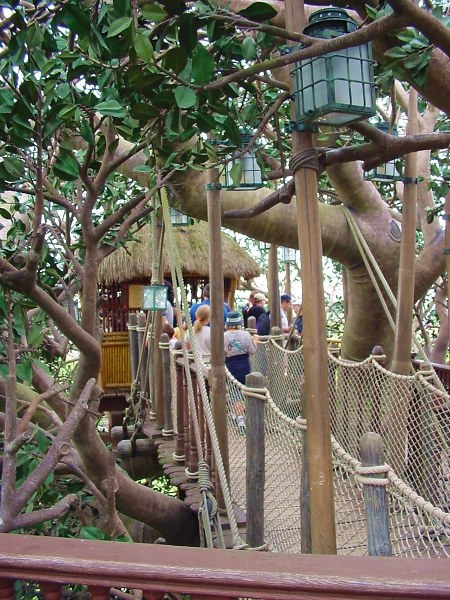
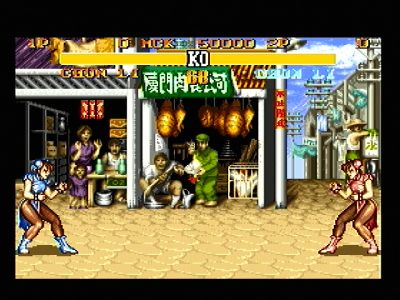
If not for Street Fighter II, it is highly unlikely that I would be in China today. This is no joke. Those of you who remember the game, will distinctly remember its immersive, character-specific backgrounds. Blanka, the electrical Brazilian beast, hailed from a stage that resembled the Swiss Family Robinson tree house. Dhalsim, the Indian holy man, fought in a temple. Guile’s, the American GI, was cheered on by other soldiers—one of whom made ambiguously obscene hand gestures. Then there was Chun-Li, the high kicking Chinese. Her stage was a vibrant Chinese street scene; chickens hung downwards from shop windows, men bicycled past, vendors squat in store fronts. Of all the stages, this was the one whose fantasy I most longed to experience. It was my first real impression of China. Fifteen years later, here I am.

Street Fighter II is still available and still played in Xi’an’s videogame arcades. During the past month, me and a few other (male) teachers at my school became obsessed with playing arcade games on our breaks from class. It was here we rediscovered the magic of our old favorites and the charms of many new ones.

Videogames are a sort of art. They may lack the emotional heft of an ambitious movie or book, but compared to Iron Man or the latest Clive Cussler novel, they hold up well. Consider one shooting game in particular wherein you and a partner play X-Files-style agents investigating a haunted museum: It starts simply enough with a few mummies popping up here and there, old Greek amphora flying toward you. Then the mummies increase, then you are surrounded, then totem poles begin lobbing pumpkin-things at you, then you are flying through a mining tunnel, then you are being swarmed by bees, then you are being chased by the Sphinx. . . .the entire game has the quality of a fever dream and it’s a thoroughly entertaining experience.

There are two major arcades along Luomashi—the pedestrian promenade near Walmart—and, if shooting mummies or pummeling a multinational cast of characters isn’t your thing, there are a multitude of other options. The major draws seem to be a game where four unallied players sit around a large table-cum-tv-screen and shoot at fish. There doesn’t seem to be much more to it than that and yet it draws crowds. In addition to the players—mostly men in their twenties and thirties—there are girl-friends and large numbers of unconnected spectators.

Of the two arcades, Tom’s World is the more varied and enjoyable. Its crowd is much younger: Parents with small children, groups of young kids, and teenagers on dates all mill about. In addition to the games mentioned, it has basketball tossing games, whack-a-mole games, drum sets, Dance-Dance Revolution, skee-ball, claw crane games, and many other fun-for-all-ages games. All games require tokens and cost about 1 yuan per game—a few more complicated games cost 1.5 yuan.

The other arcade Can Lan Yang Guang (whose mouthful of a name translates to something like Happy Sunshine Fun City) is less kid friendly. It’s darker and dingier with less variety of games. Whereas Tom’s World is all bright tones and high ceilings, this place resembles a series of underground tunnels. Colors are black and muted. People are packed together at close quarters. The crowd is older—no children on the day I visited. Instead it there is an abundance of older boys with sparse growths of mustache and girls caked in make up. I made my way through the place feeling as though I might stumble into a back room with a Russian roulette game in progress of be greeted by a tout offering to sell me drugs or endangered animals. Overall, a less wholesome feel.

Clearly, my sympathies lie with Tom’s World and, during the past week, a number of my work breaks have been filled with visits. Typically I settle in at the Street Fighter IV game only to be repeatedly out-matched by a series of small children who take turns at beating me, their laowei compatriot.

The only downside of these places are the slot machine style games whereat lonely, stone faced men and women plop in coin after coin. Just like pull tabs in a bar or the Las Vegas casinos, these games seem a bit dreary and dispiriting. Avoid them, however, seek out the bright colors of other games, and you will find yourself re- experiencing a little of the youthful pleasure such places once provided.

Monday, August 16, 2010

Kashgar


“I hate the Han, I hate the way they treat the Uighurs. They’re colonizing them. I’m so glad that I’m living in Urumqi—not “Wulumuqi”—I have all Uighur students. They’re much kinder, much friendlier. Han are rude. They spit, they cheat you. They don’t care about culture.”

The German said all this to me as we waited for our noodles. He was—perhaps unsurprisingly—tall, blond, clean-cut, and impeccably well spoken in English. We’d met at the hostel and were going over the details of an impending trip to the mountains. He’d been living in China for ten months now (two in Urumqi) studying on a scholarship. He was fantastic in speaking Chinese and Uighur and was passionate about the latter. His jeremiads against the Han struck me as extreme; his ability to zealously commit made me feel old. I felt inklings, stirrings of what he was getting at, but nothing sparked such partisanship in me.

“Well,” I put in, “I have to agree about culture. I came to China to experience the culture. I didn’t expect things to be the same now as one hundred years ago, but I also didn’t expect to see . . .well, no culture. And, because they don’t seem to care for their own culture, they have very little respect for other’s cultures. My students know little and care little about minority peoples.”

“Yes! And here you see so much culture. You feel it. I always try to use uyghurce when I speak. It’s a sign of respect. But the Han—the fucking Han—they don’t even try to learn. They don’t mix . . .”


Imperialism With Chinese Characteristics

Every large country—and most small countries—have sizeable numbers of people who exist at a remove from the national culture. Northern Canada is an Inuit autonomous zone, swaths of Russia’s southern regions are divided among various minority peoples, Brazil’s Amazon region is awash with diverse tribal groups, and the US has hundreds of reservation lands governed by special laws; even somewhere like Mexico that lacks such special regions is full of minority peoples speaking their own languages and raising their children up in cultures distinctly separate from that seen on tv and in the halls of power. And most, if not all, of these groups suffer from abuse of their human rights.

My German’s views were nothing special. Every minority has its outside spokespeople—academics and activists—who champion the uniqueness of the culture and castigate the oppressive state that rules over it. When it comes to China, Tibet gets most of the attention. In the US, it’s fashionable to sport “Free Tibet” t-shirts and stickers, but the realities of the situation, both there in Xinjiang, seem muddier: Small, weak countries with no access the sea, small populations, limited water-supplies, and huge powerful neighbors are rarely fully independent. Were a place like Xinjiang free tomorrow, it would become just another zone where the US, Russia, China, and Pakistan compete for influence. One minority group would be pitted against another. Regions with the most resources would receive money and attention. Regions with nothing would be ignored.

What China provides is stability. It builds roads and electrical grids, it establishes bank branches and doles out credit to rural areas. East coast money flows in to fund massive mining and oil ventures that offer jobs where no jobs had been. By incorporating Xinjiang in a national market it creates more opportunities for local farmers to sell their produce. Through infrastructure and security, it encourages tourism.

That’s on the one hand. With Chinese money, however, flows Chinese people. Millions. Business in China is all about connections—friends getting jobs for friends, cousins looking out for cousins. (As the saying goes, when a man becomes emperor, even his pets become ministers.) This isn’t conducive to promoting minority involvement. Newly created jobs go to Chinese. Government policies to boost wages in the region encourage settlement by Han.

A thousand years ago, deserts meant something. The Silk Road was nothing but oasis towns and wilderness connecting the Chinese in the east to Central Asia in the west. Now half the population of Xinjiang is Han Chinese—mostly concentrated in the eastern half, centered on the capital of Urumqi. The traditional names of Silk Road towns—Kashgar, Yarkand, Hotan—are unknown to Chinese who have renamed them—Kashi, Sanche, and Heitan, respectively. Thousands of years of culture is disappearing.

I’ve met a good number of Chinese by now, mostly twenty-somethings, who were born and raised in Xinjiang. By and large they have no interaction with the Uighurs; they might know how to count numbers and say “Hi,” but little else. Many are unaware of the traditional names of cities they live in.

I spent most of my time in the Uighur part of Kashgar, but it was clear that the People’s Park represents the dividing line between populations. The park is full of old Chinese doing precisely the same activities you would see in Xi’an—singing, strumming instruments, playing cards, doing various exercises. Further south the businesses and restaurants become more recognizably Chinese. The architecture is newer and the buildings—shopping malls and banks—hint at East coast money and aesthetics. In the morning, you see restaurant staffs gathered together for their morning pep-talks. There is suddenly more public spitting and urination. At night there is line-dancing and basketball. All those involved are Han, any Uighurs visible stand off to the side and watch. Policemen and soldiers patrol. You are wholly back in China.

And the locals don’t like it. There have been sporadic uprisings over the years and last year, in 2009, the most major in a generation occurred. Large-scale rioting broke out in Urumqi with gangs of Uighurs spilling out from the city’s shanty-towns and attacking Chinese. In the following week a series of pokings and stabbings led to rumors of Uighurs roaming the city, injecting Han with AIDS-laced hypodermics. Han began organizing vigilante groups to mete out vengeance in the Uighur parts of the city. The army was sent in and the city put on curfew. Facebook—thought to be used in the organizing—was banned in China.

Powerful states like the US or China seek to impose order on their territories and (if possible) on the world. Many of the problems states face is that the world is not always as they would like and many peoples do not want their lives altered so that some outside culture can “make sense” of them. Xinjiang presents China with this problem.

A thousand years ago there were “Uighurs.” They were one of many different groups (and, really, their history can be traced back twice as far), but as to what being a “Uighur” truly means in modern China, the question is more vague. The range of faces and styles is vast, suggesting that the category is rather broad—the music, the food, and the dress are all a mix of different Central Asian traditions. The only true commonality is the language, and even this has regional variations—perhaps because many other minority groups in the region, like Tajiks, use the language as a lingua franca. But the Uighur spoken today is hardly the Uighur spoken in the 11th century.

The quest for what is authentically “Uighur” is a mirage. China claims to have dominated the region for centuries, Uighurs can point back to an ancient kingdom of their own and various periods of fleeting independence in the last century, but it’s all posturing. The connection between past and present is mutable. Much of the world is an endlessly mixing hodgepodge of tribal groupings. One group intermingles with another and becomes something new. Time passes, but the location remains the same. In the end, there is but one irreducible fact as the Uighurs see it: They are from here, the Chinese are not.

Thus, for all these signs of having dug in, there is a sense among the Han of being deep in Indian Country, of holding down the fort, of pacifying the land. It’s very uncomfortable to watch one people slowly drown out another people, but it would be foolhardy to think the process unique or even particularly bad compared to how other empires have gone about it.


Uighur Culture


In the last year, the central government has poured large amounts of money into the region and talked up its attempts to improve the economy. I flew into the city on the one year anniversary of the riots and it is no coincidence that the day’s China Daily contained a front page article discussing efforts to make Kaghar into a special economic zone, complete with quotes from approving locals.

The most apparent manifestation of this largesse, however, is the nearly complete destruction of Kashgar’s old city. Old, Islamic style building have been torn down and are set to be replaced by new apartment blocks which the government promises to construct using traditional architectural motifs. In the meantime, though, there is nothing but dusty rubble and scattered ruins. The impression is creates is of Grozny more than the Silk Road.

Such destruction from on high has not sat well with locals and on Friday, watching the crowds—hundreds upon hundreds of utterly unChinese faces—flow into the Id Kah mosque for prayer, I was reminded of how much the government fears gatherings. For centuries, leaders throughout the Middle East and Central Asia have been wary of the mosque and the marketplace. Men come together as one to pray and trade; they complain, they talk, they surge. Revolutions start here. Yet such resistance will likely produce diminishing returns.

What then is this culture that is passing away, whittled down, marginalized into nothingness?

As I’d explained to the German, I’d come to see “culture,” so I wish I could give more details—more local flavor—but I was hardly here long enough. I didn’t go to weddings or parties or visit people’s houses. Mostly I did a lot of walking, looking, listening and tasting. Much of my time was spent at little street restaurants chatting pidgin with cooks, wandering along the street, or making my way through parks and markets.

Generally, I was reminded of Turkey—well, the poorer parts of Turkey. The rhythms of speech, many of the faces, and the gestures were largely similar. Even the advertising was similar: Towering over the central square was a billboard for Ulker, a major Turkish candy company. Stores selling suits had display images featuring cast members from Kurtlar Vadesi, the Turkish mafia soap opera.

Woman dressed in the more colorful versions of the moderate Muslim style (long dresses or coats and colorful headscarves), but some covered their faces with purple-mesh, or wore heavy, brown coverings over their entire bodies. The men typically wore slacks and white shirts; usually a little hat sat a top their heads. Overall, the street life had a far more masculine flavor than in China. Women were present, but men, large groups of them, gathered together in the squares, on the streets, looking down from second-floor café balconies, and in front of shops.

The people I saw also seemed older. There were far less twenty-somethings out and about. Whether this was because they were at work, in school, or had migrated to larger cities, I can’t say. At the city’s main bookstore, I struck up a conversation with one young Uigher. He had just finished university in Korla and was now preparing to take a civil service exam. Most of our conversations revolved around salaries, electronics, and the promise of life in America. The picture he painted of Kashgar was less than enthusiastic. Opportunities were lacking.

Such chats aside, my main focus tended to be the food—something whose experience language gaps cannot diminish. Uighur food could be fairly summed up as meat and bread. It wouldn’t be totally fair, but it would be largely true. Kebabs are the heart of the Uighur cuisine and Lord are they good! Fat chunks of meat soaked and coated in a spiced-egg marinade are wood-oven baked. The result is a smoky-flavored meat with a light, crispy crust. The meat itself is juicy and flavorful; always four pieces per skewer, a combination of fat, liver, and two standard cuts.

As for bread, Uighurs produce, large disks of bread with raised edges resembling empty pizza crusts. On the flat circle are stamped and intricate designs. Sprinkled over the bread for flavor are a variety of spices—the most prominent ones being sesame seeds and thyme. Every street seems to have at least one—if not multiple—vendors. Also offered are bagel-shaped (and bagel flavored) rounds of bread that, since vendors had no ready name, I will refer to as “bagels.”

Side by side with the bread vendors are fruit vendors. Everywhere you turn there are carts and stands overflowing with fruits. The region has some of the freshest, tastiest melons I have ever eaten. A few would be recognizable in any western supermarket, but the variety extends far wider to encompass all hues and textures. Small crowds gather around, waiting for their turn as vendors dexterously carve up and hand out slices.

Off the street entrees include noodle dishes. The most famous—the one I’d learned to say on day one of my Uighur language classes in university—was laghman. This is a combination of green peppers, mutton, tomato, and onions, poured over noodles. It’s simple and satisfying. More intimidating is dapanji, a dish of spicy chicken chunks and potatoes. Rather than rice, one mixes long, flat noodles into the dish. Small game hens are also very popular. Fish, though troublingly far from any major river and ocean, is also available in battered and fried (but not de-boned!) form.

Uighur food is a mélange of different, regional cuisines. On one street, I came across a vendor selling poruska, egg rolls covered in raw sugar and filled with fatty meat and onions. The combination—to my palate—worked as well as it sounds, but the obvious Russian influence intrigued me. (Sure enough Xinjiang has long been an area for Chinese-Russian competition and the areas around the Ili Valley have modest Russian populations.)

Other borrowings include samsas—bread filled with meats and other stuffings before being oven baked—and pollao, fried rice cooked with onions, carrots, and cumin.

For drinks, a version of tea, slightly stronger than Chinese varieties is the standard, but milk too is plentiful in Kashgar. Little stands sell it by the glass and, at night, ice-cream vendors set up here and there, portioning-out fresh-made cups. In the countryside the milk is fresh and un-pasteurized—outside the city, my tea was repeatedly softened with yak’s milk.

And, during my trip, I drank a lot of yak’s milk . . .


Outside the City


Living among Han Chinese, it’s easy to forget that the People’s Republic of China is a “multi-ethnic state” with more than fifty different minority peoples “fairly” represented. It’s necessary to visit the areas where these people live to be reminded. Tourist site after site contains informational plaques attesting to the multi-ethnic character of the state and recounting the conscientious steps the Party has taken to improve or promote buildings and sites of particular importance to minority groups. The feeling such a heavy-handed message produces, of course, is the opposite—constantly shouting how stable a society is tends to the best indication something is amiss.

Going outside Kashgar, along the Karakorum Highway towards the Pakistani border, gave a very good sense of how minority life is lived in China. The region is populated by Kirghiz and Tajiks. The former are more Asian-looking while the latter, as the pattern of their speech would suggest, as more Persian. Both peoples tend to live in yurts and both have faces reddened by high altitude wind and sun. Clothing-wise people—especially far away from population centers—wear combinations of the traditional and the modern. One man will be wearing a peaked, white Kirghiz hat while his friend’s head is shielded by a baseball cap marked with a Japanese-designer’s name.

Along the roads, Kirghiz wait for passing cars to stop whereupon groups of men and children swarm. Most commonly on offer are little, polished, translucent stones that glow orange and green when held to the light. None speak much Chinese or Uighur. Their world is concentrated around their mountain valleys. In a country where social mobility is largely a product of success on the national gaokao test (administered in Chinese) the chance of escaping one’s conditions is less than hopeful.

Tajiks seemed more urbanized in so far as they concentrated around the “city” of Tashkurgan. Here arid mountain landscapes give way to a verdant expanse of valley with the town in its center. The fields around it are dotted with yurts, lowing cows, and the smoke from small fires.

In the town we—the Uighur-phile German, a Frenchman, and myself—wandered around in search of diversion. There was little. The city center consisted of three or four streets lined with dusty stores offering clothes, snacks, or farming supplies. A couple of hotels, a bar, and a pair of restaurants—little else. The most imposing building in the town (aside from police and military installations) was the local cultural center and museum. We headed over to it and entered into a small lobby where two men were busily playing a game of ping-pong.

One of the men, Kaftan, could speak English. He had studied in Beijing and now worked as the local union representative for the city. There were, he explained, something like sixty different unions in this small town. By “unions” he meant something similar to “work units”—every worker in a particular job banded together for the purpose of government oversight. He was clearly bored with the opportunities his town had to afford and peppered us with questions about how he might start a tourism business.

By nightfall the street were empty—the only noise coming from a single bar and the occasional moo from the field.

We’d chosen to stay in the cheaper of two hotels near the entrance to town. Our hotel had a main building where tour groups stayed, its concierge desk manned by an attractive Han girl with whom me and the Frenchman flirted. Our room, however, was in a newly constructed, two-story plasterboard building adjacent. The whole place smelled like cigarettes and the desk was managed by a middle age Han man with a large mole on his cheek.

That night we lay around watching Germany lose in the World Cup. The following day we visited Karakol Lake. The three of us made it halfway up a little mountain before the German grew tired and decided to head back down. He’d been grousing all day about various unanticipated inconveniences the trip had thrown in our path and, needing a break from complaints, I opted to remain where I was. The Frenchman kept going all the way up, until he was nothing more than a dot on the peak of the mountain. The wind at this altitude hit into you like fists. I found a rock that blocked me from the worst of the buffeting and gazed up at the deep blue sky above. Even from my halfway vantage, I could see the entire valley and it’s surrounding mountains spread out around me.

Some travels give you the illusion that you are venturing into untouched lands where people have seldom been; traveling into the mountains of Asia, you go were people never seem to have left. The lake below was dotted by yurts and I was overcome with the knowledge that, a thousand years ago, there had been others standing in the same place.

Not that life is static: Electrical wires run along the roads bringing power to people ensconced deep in the mountains; cars, trucks, and motorcycles bring supplies rapidly. But even directly along the roads-sides, where access to commerce is easy, life remains harsh. People live scattered in small brick houses, sheltered from the harsh winds of the open plateau. The densely packed Chinese east seems like a dream.

(Photo essays available HERE)